
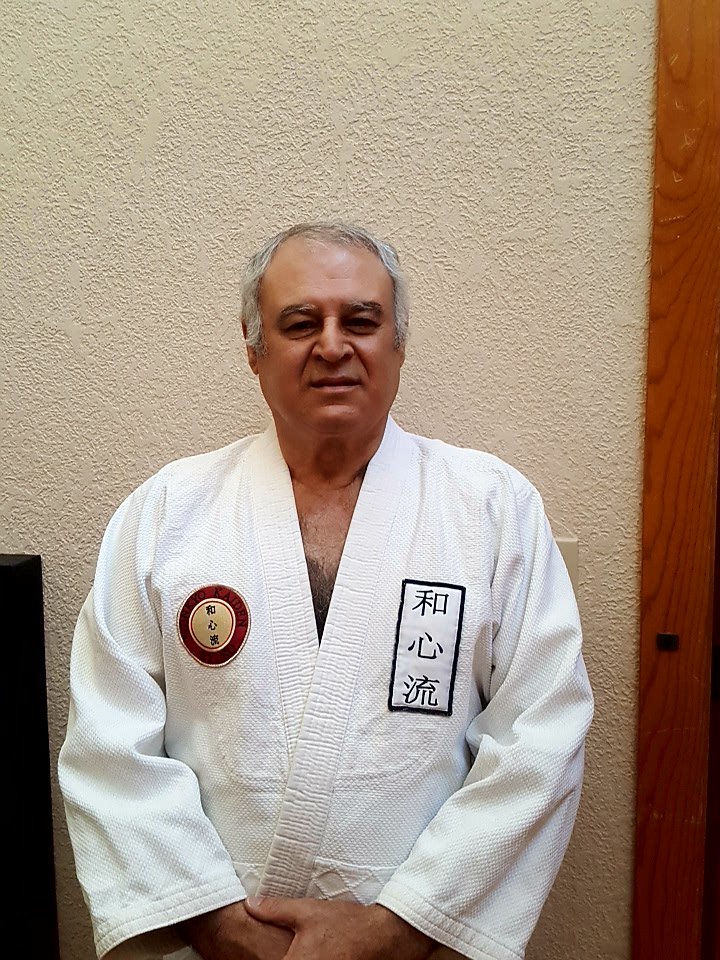
Andrew Yiannakis, Ph.D., 8th Dan Jujutsu, 6th Dan Judo, University of New Mexico
These include:
1.The use of Japanese terminology in the dojo.
2. The use of traditional Ways and Practices
(e.g., etiquette and protocols) in the dojo.
3. The study and practice of Jujutsu as a combat art, which includes BOTH offensive and defensive techniques, strategies and tactics.
4. The inclusion of talks and lectures in the dojo that speak to principles, history, philosophy, and the like. In Traditional Systems this is considered quite normal.
5. The wearing of proper attire on the mat. This may include a hakama, where appropriate, and the avoidance of numerous patches that serve to advertize commercial interests and organizations (a System Patch and a patch denoting a Teaching License are acceptable). For men the wearing of a shirt under the gi is NOT acceptable while on the mat. This is a highly visible distinguishing characteristic between genuine Japanese systems (and Japanese based) and their various Western Jujitsu manifestations (note spelling).
6. The application of the highest levels of hygiene practices, and the wearing of zori from the dressing room to the edge of the mat are a major requirement in traditional systems.
7. In traditional systems the correct spelling is Jujutsu. This is based on the Romanization of the Japanese language (Romaji) , the system adopted by all Japanese martial arts including Jujutsu, Judo, Aikido, Ninjutsu, Bujutsu, Karate, Jojutsu and Kenjutsu, among others. In Romaji “Jutsu” means art or craft. “Jitsu” actually means reality or truth.
8. While sparring is strongly encouraged in
training, competition for medals and trophies is NOT. Combat systems don’t adapt
well to competition rules, and training for
competition must, of necessity, focus
on teaching only those techniques that are
legal and safe in such a context. As a consequence, in Sport Jujitsu, for example, combat techniques are rarely taught and these often wither away and die.
9. Kata is an essential component of
all Traditional Jujutsu Systems. Kata
introduces and reinforces the application of
key principles and, as such, it is an
essential aspect in teaching offense and
defense safely. Kata, however, is only a
starting point because effective combat
training requires much more. See item 10 below:
10. The inclusion of Bunkai (fighting
applications). To truly prepare students for
both offense and defense instructors
initially employ Kata as a foundation for
moving into fighting applications, under
more realistic conditions. This is where the real training for combat begins to take shape.
11. Traditional Jujutsu Systems, in addition to stressing both offense and defense, also serve as vehicles for character development, and for the acquisition of broader goals that focus on mutual welfare and benefit. Thus, as Budo Systems they are also about the perfection of character and social responsibility.
12. Traditional Jujutsu Systems are mostly an outgrowth of earlier systems (Bujutsu Systems) from both the Early Classical Period (circa 900-1502), and the Late Classical Period (circa 1503-1868). However, we see evidence of their emergence as early as 1860, so we may safely assign the date of the emergence of Traditional Systems to about this time. Thus, we may assert with a high degree of confidence that by about 1930 (give or take), Traditional Budo-style Jujutsu Systems had established a secure foothold in Japan, and even began to spread Jujutsu as a Budo Art beyond the shores of Japan.
 Andrew Yiannakis, Ph.D.